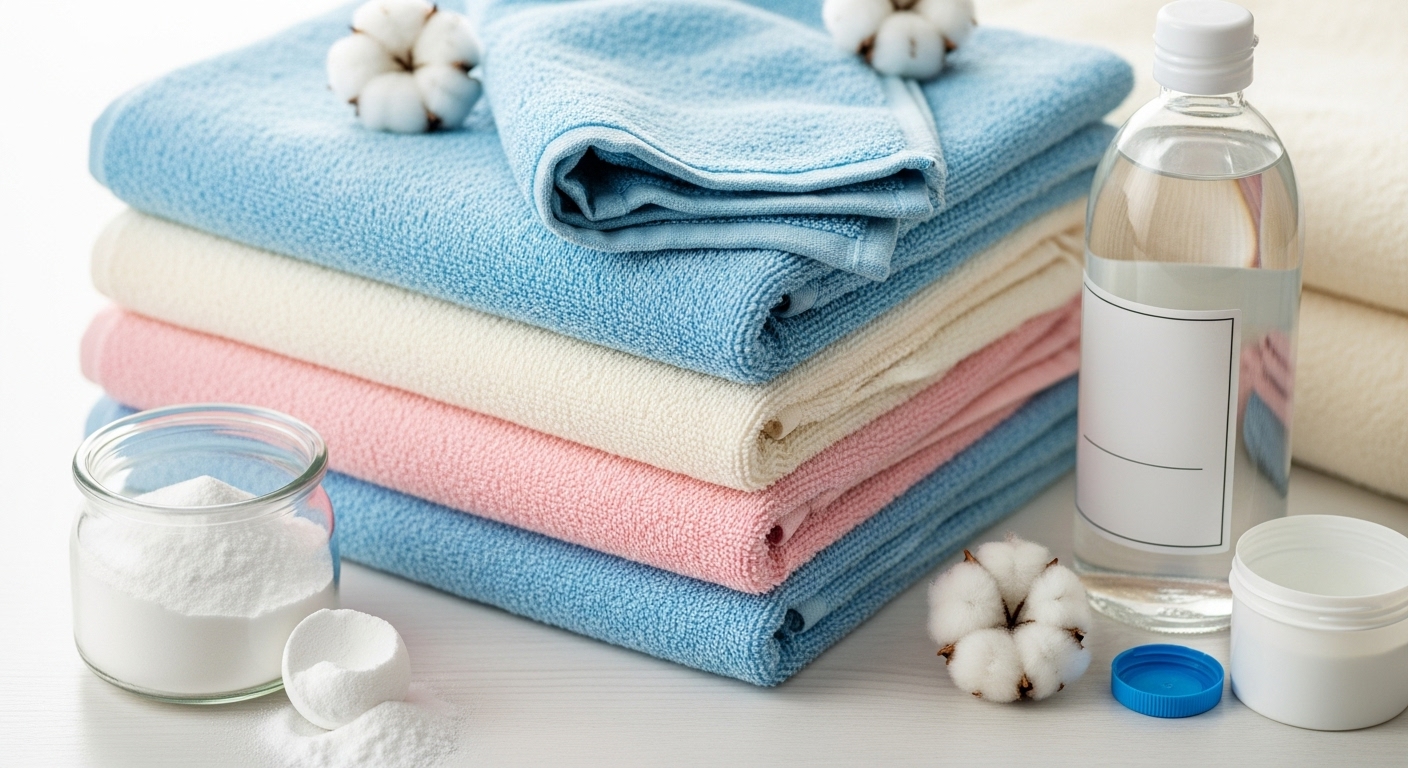
Soft towels aren’t about buying the fanciest brand—they’re about removing buildup and drying them the right way. Most towels get stiff for the same reasons: too much detergent, leftover fabric softener, hard-water minerals, and not enough rinsing.
Here’s a practical, experience-based routine for keeping towels fluffy, absorbent, and not scratchy—plus the truth about vinegar and common towel myths.
Why towels get rough and “crunchy”
Towels feel stiff when their fibers get coated with:
- Detergent residue (most common)
- Fabric softener/wax buildup (feels “soft” temporarily but kills absorbency)
- Hard-water minerals (calcium/magnesium deposits)
- Body oils + skincare (especially face towels)
- Over-drying (heat damage makes fibers brittle)
The solution is basically: less product, better rinsing, and smarter drying.
1) The right detergent amount (this is the biggest fix)
Most people use 2–3× more detergent than towels need.
A good starting point
- HE (high-efficiency) washer: use 1–2 tablespoons of HE liquid detergent for a normal towel load
- Standard washer: still use less than the cap suggests—start around 2 tablespoons and adjust
If your towels smell clean and rinse clear, you’re using enough.
Signs you’re using too much detergent
- Towels feel stiff even when “clean”
- They smell “soapy” instead of fresh
- They don’t absorb water well (water beads up)
- Washer has extra suds on rinse
Best habit: Cut your detergent amount in half for towels and see how they feel after 2–3 washes.
2) Vinegar: what it does (and what it doesn’t)
The truth
White vinegar can help soften towels by breaking down detergent residue and some mineral buildup—especially in hard water.
How to use vinegar correctly
- Put ½ cup white distilled vinegar in the fabric softener compartment (or add during rinse)
- Use it occasionally (every few weeks or once a month), not every single wash
What vinegar won’t fix
- Towels that are coated in years of fabric softener/oils may need a deeper reset (see below)
- Vinegar won’t magically restore severely heat-damaged fibers
Vinegar myth
Myth: Vinegar is basically the same as fabric softener.
Reality: Vinegar helps remove buildup; softener adds a coating that reduces absorbency.
3) Fabric softener: why it’s the #1 towel killer
Fabric softener and dryer sheets coat towel fibers with a waxy layer. It can feel “smooth,” but it makes towels:
- less absorbent
- more likely to hold odors
- more prone to buildup stiffness over time
If you want soft towels: skip liquid softener and dryer sheets for towel loads.
4) The “towel reset” method (for stiff or smelly towels)
If your towels are already rough or musty, do this 2-step reset:
Step A: Wash with vinegar (no detergent)
- Hot or warm water (check towel care labels)
- ½–1 cup white vinegar
- No detergent, no softener
Step B: Wash with baking soda (no detergent)
- Hot or warm water
- ½ cup baking soda
- No detergent, no softener
This combo helps strip residue and neutralize odors.
Important: Don’t mix vinegar and baking soda together in the same cycle. They cancel each other out.
5) Water temperature: warm is usually the sweet spot
- Warm water: best all-around for softness + cleaning
- Hot water: can be good for occasional deep clean, but too much heat can wear fibers faster
- Cold water: fine for lightly used towels, but may not remove oils as well
If your towels are stiff and you have hard water, warm/hot (as allowed by the label) often helps more than cold.
6) Load size matters (don’t cram the washer)
Towels need room to move so they can rinse clean. If you overload:
- detergent doesn’t rinse out
- towels rub and compact
- they dry stiff
Rule of thumb: the drum should be about ¾ full, not packed tight.
7) Drying tips that keep towels fluffy (and not crunchy)
Drying is half the softness.
Best drying routine
- Shake towels out before drying (this fluffs fibers and prevents flat drying)
- Dry on medium heat (high heat can “bake” stiffness)
- Don’t over-dry—pull them out when just dry, not scorching hot
- Give them a 2-minute air fluff or a short low-heat finish if needed
Want extra fluff?
- Toss in dryer balls (they help separate towels and increase airflow)
- If air-drying, finish with 5–10 minutes in the dryer to soften
Dryer myth
Myth: High heat makes towels softer.
Reality: High heat can damage fibers and make towels feel scratchier over time.
8) How to prevent musty towel smell
Musty towels usually come from being left damp too long or trapped buildup.
- Don’t leave towels sitting wet in a hamper
- Hang them fully spread out after use (not bunched)
- Wash quickly, and dry completely
- If you have persistent odor, do the reset method above
9) Common towel mistakes (quick checklist)
- Using too much detergent ✅
- Using fabric softener or dryer sheets ✅
- Overloading the washer ✅
- Over-drying on high heat ✅
- Not washing often enough / leaving damp towels piled ✅
Fixing just detergent amount + softener usually transforms towels within a few washes.
The simple routine I recommend (easy and consistent)
Every wash:
- Warm water
- Small amount of detergent (1–2 tbsp)
- No fabric softener
Every few weeks (or monthly):
- Vinegar in rinse (½ cup)
When towels get stiff or smell weird:
- Do the 2-step towel reset (vinegar wash, then baking soda wash)