If you’re trying to look polished without turning laundry day into a production, the steamer vs iron question matters more than people think. I’ve used both for daily work shirts, trousers, and delicate pieces—and the “best” tool depends on fabric type, how wrinkled the item is, and how much time you actually have.
Here’s the honest comparison, with clear pros/cons and a practical recommendation at the end (no product pushing, no links).
The quick answer
- Best for daily work clothes (fast, low effort): Garment steamer
- Best for crisp, sharp results (collars, creases): Iron
- Best for delicate fabrics (silk, chiffon, synthetics): Steamer, most of the time
- Most realistic setup: steamer for 80% of days, iron for “need-to-look-perfect” days
How they work (in plain English)
Garment steamer
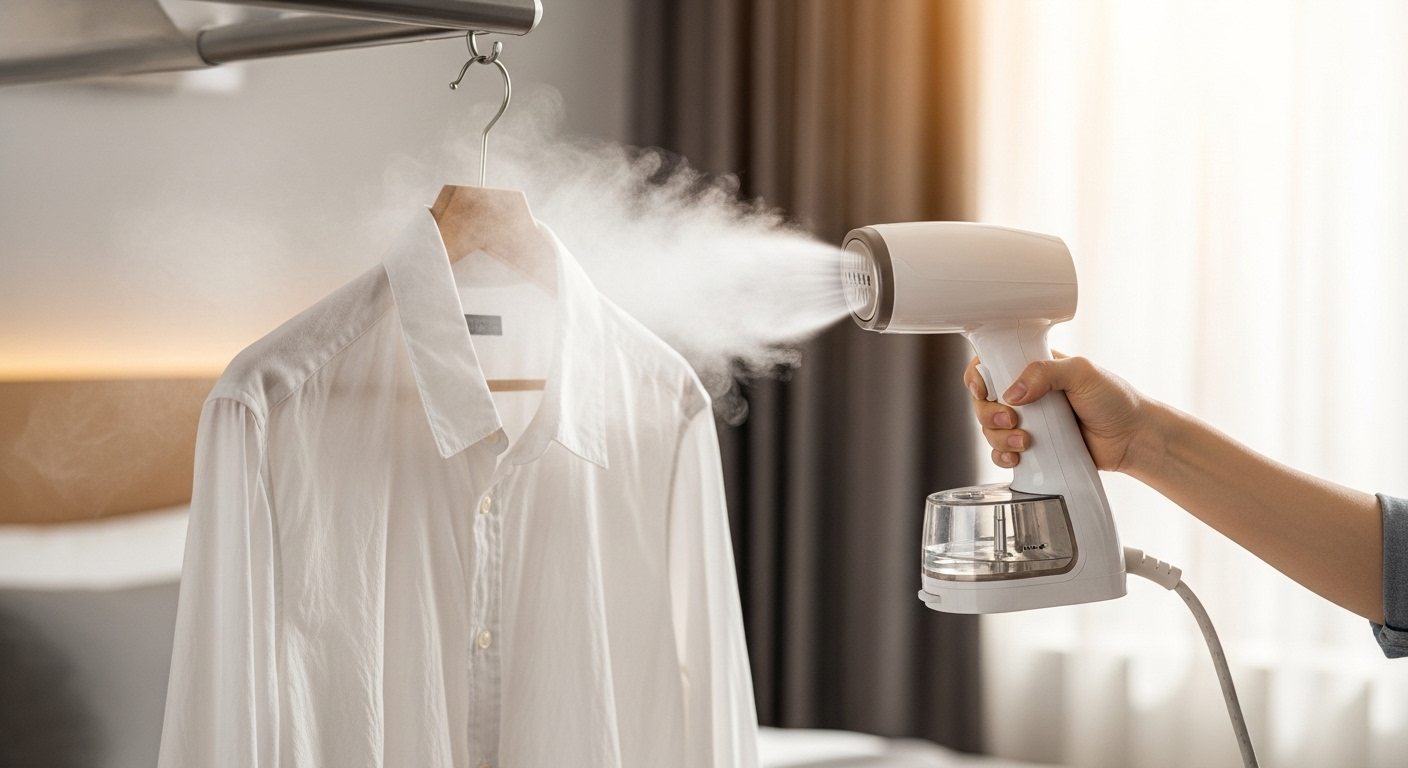
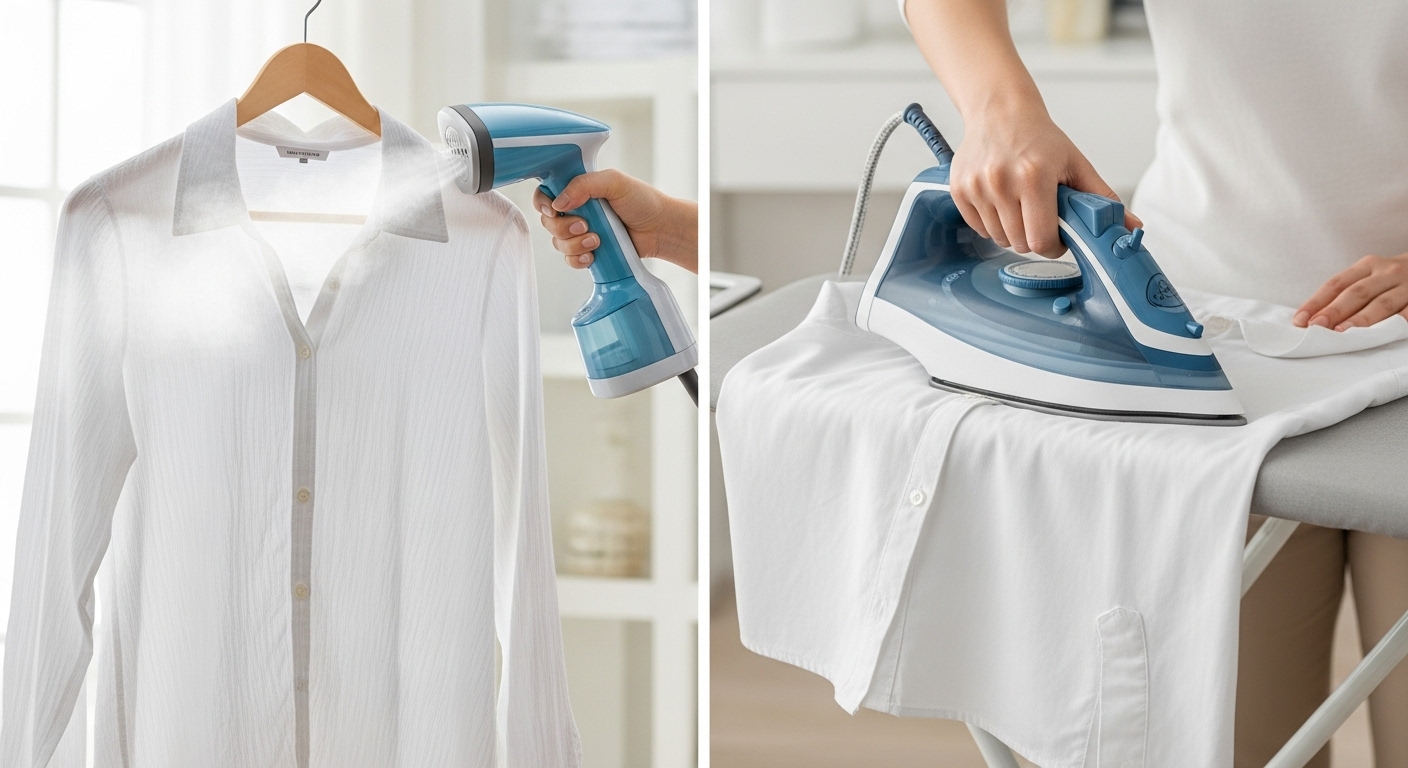
Uses hot steam to relax fibers so wrinkles fall out. You usually steam clothes while they’re hanging, using light passes.
Iron
Uses direct heat + pressure (often with steam) to flatten and shape fabric. It’s better at creating structure—sharp lines, crisp edges.
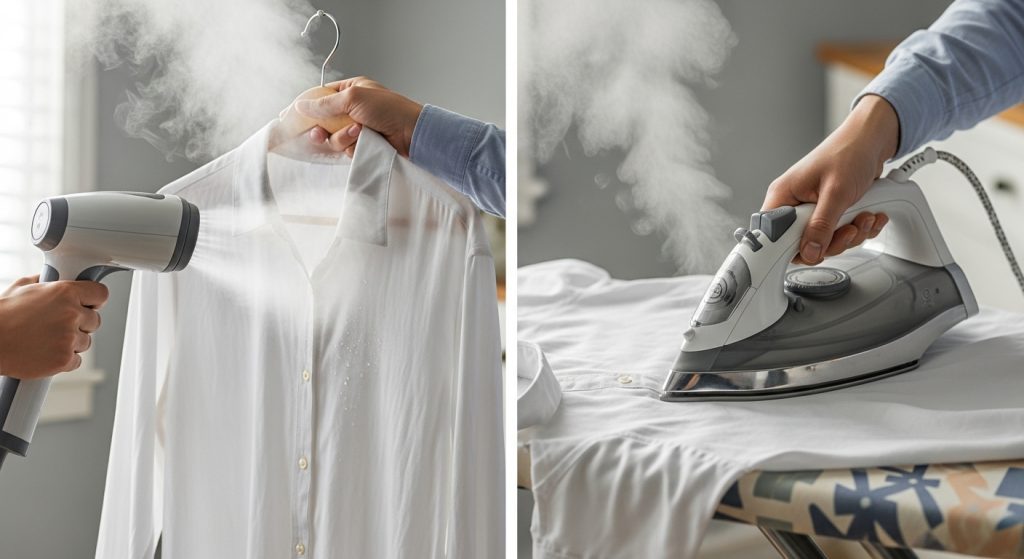
Garment steamer: pros and cons
Pros
1) Faster for everyday touch-ups
For morning work clothes, a steamer is usually quicker: hang it up, steam, done. No board, no setup.
2) Gentler on delicate fabrics
Steam is less likely to scorch silk and synthetics if you keep a bit of distance and keep moving.
3) Great for odd shapes and tricky areas
Dresses, pleats, blouses, jackets, and items with embellishments are easier with a steamer.
4) Better for “freshening”
Steam can reduce light odors and revive garments between washes—especially blazers and sweaters.
Cons
1) Doesn’t give a crisp “pressed” look
Steamed shirts look smooth, but not sharply pressed. Collars and cuffs can still look a bit soft.
2) Struggles with heavy wrinkles and thick fabrics
Linen, heavy cotton, and deep creases often need more time (or an iron).
3) Can cause water spots if used incorrectly
If it spits or you hold it too close on sensitive fabric, you might get damp marks.
Iron: pros and cons
Pros
1) Best for crisp work shirts
If you want collars, plackets, and cuffs to look sharp, an iron wins—no contest.
2) Handles stubborn wrinkles better
Heavy cotton, linen, and “deep set” wrinkles respond best to heat + pressure.
3) Creates structure and creases
If you want dress pants creases or sharp edges, you need an iron.
Cons
1) More setup and effort
Board, heat-up time, repositioning the garment—it’s not the quickest tool at 7:45 AM.
2) Higher risk on delicates
Silk, polyester blends, satin—one mistake can shine, scorch, or flatten texture.
3) Easier to overdo it
Too much heat/pressure can make certain fabrics look flat or “crushed.”
Which is better for daily work clothes?
If your “work clothes” are mostly:
Button-down shirts, dress pants, crisp collars → Iron wins
- The difference is obvious on collars/cuffs and sharp seams.
- If you’re in a role where presentation is strict (finance, law, formal office), the iron look is more “finished.”
Blouses, knit tops, dresses, casual office wear → Steamer wins
- For most modern work wardrobes (knits, blends), steaming looks clean and professional with less risk and time.
My real-life rule:
- If you need a crisp look → iron
- If you need a neat look fast → steamer
Which is better for delicate fabrics?
Most of the time: steamer.
Steamer is best for:
- Silk (with distance and gentle passes)
- Chiffon, viscose/rayon blends (careful—don’t soak)
- Polyester, delicate synthetics
- Lace, embellished items
- Wool coats/blazers (freshen + relax)
Iron is better only when:
- You need a crisp finish on a delicate item and you know the proper heat setting
- You use a pressing cloth and low heat
- The fabric tolerates pressing without shining
Tip: If you’re ever unsure, steaming is safer than ironing.
Side-by-side: what each tool is best at
Steamer is best for:
- quick morning touch-ups
- delicates and “no-risk” smoothing
- dresses, blouses, pleats, jackets
- reducing light wrinkles and freshening
Iron is best for:
- crisp collars, cuffs, shirt plackets
- linen and heavy cotton
- making creases and sharp edges
- “perfect” formal look
What I recommend (optimal choice)
If you only choose ONE tool:
Choose a garment steamer if your goal is daily convenience and you wear lots of delicates or modern fabrics. You’ll use it more often, which means your clothes will look better more days of the week.
Choose an iron if your wardrobe is heavy on button-downs and dress pants and you care about a sharp pressed finish.
If you want the best real-world setup:
- Steamer for everyday: quick smoothness, low risk, minimal setup
- Iron for key pieces: shirts, collars/cuffs, formal outfits, linen
Pro tips (experience-based) to get better results
Steamer tips
- Steam with the garment hanging, and pull fabric gently taut.
- Keep the steamer moving—don’t hold it in one spot.
- Let the item dry 1–2 minutes before wearing.
Iron tips
- Use the right temp setting and a pressing cloth for delicates.
- Iron shirts in order: collar → cuffs → sleeves → front panels → back.
- Don’t press hard on synthetics—light pressure + correct heat.