If your floors look “clean” but still dry with haze, streaks, or sticky patches, it’s usually not your effort—it’s the mop type + too much cleaner + a dirty pad. Tile and vinyl both reward the same approach: microfiber + controlled moisture + frequent pad changes.
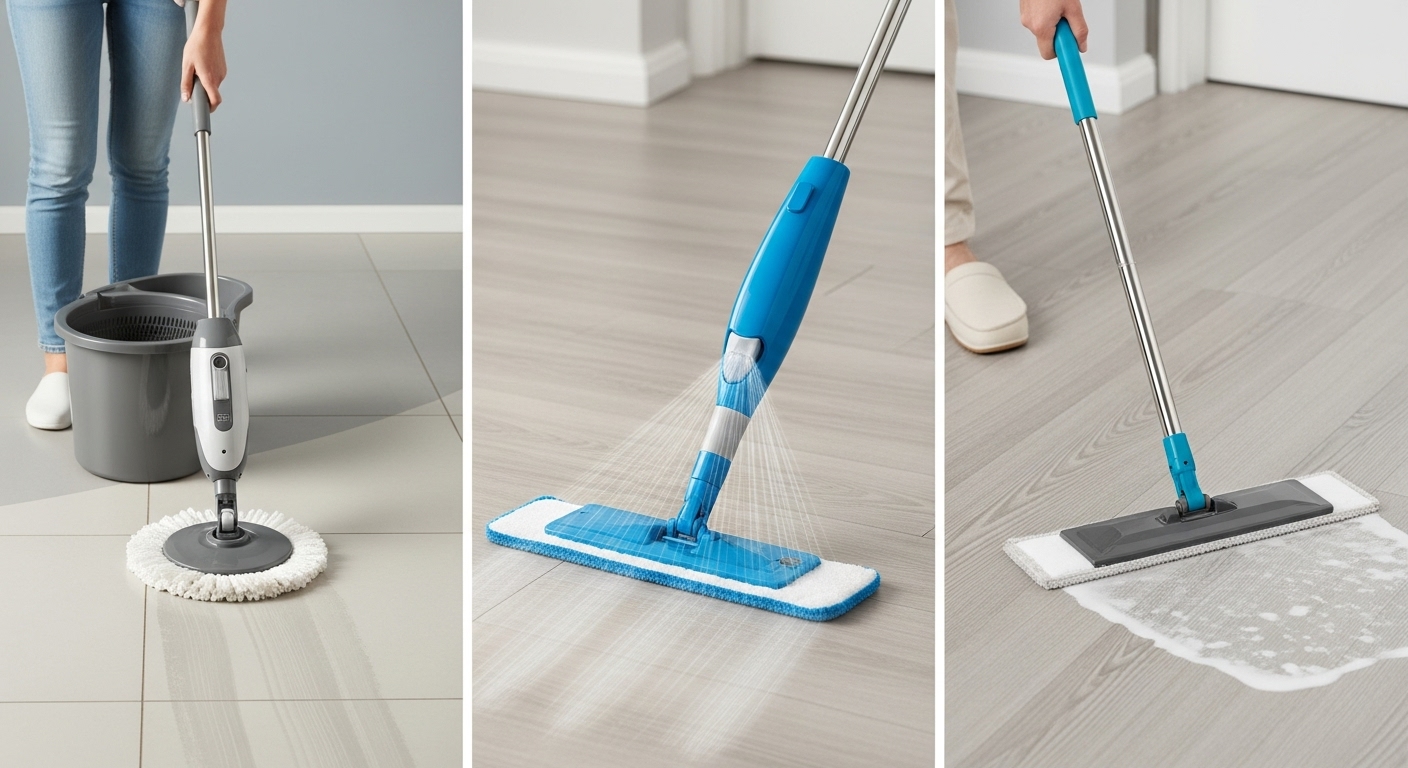
Below is a practical guide to spin vs spray vs flat mops, plus the best compact picks for streak-free results.
Disclosure: As an Amazon Associate, I may earn from qualifying purchases.
Quick picks (based on real-life use)
- Best overall for most tile + vinyl homes: a refillable spray mop (best moisture control, easiest streak-free routine)
- Best for larger rooms / faster coverage: a wide flat microfiber mop (18″)
- Best if you already own Swiffer PowerMop or Bona: reusable microfiber pad replacements
- Best for daily pet hair + dust (before wet mopping): a large dry dust mop
Why tile and vinyl streak (and how to stop it)
Most common causes:
- Using too much cleaner (residue dries into streaks)
- Mopping with a dirty pad (you’re spreading grime)
- Hard water (mineral film)
- Floors staying too wet too long (especially vinyl)
- Using fabric softener on microfiber pads (kills absorbency)
Streak-free rules that actually work:
- Vacuum/sweep first (wet mop on grit = smeared mud).
- Use less soap than you think (often just water + a tiny amount of pH-neutral cleaner).
- Keep the mop head damp, not wet.
- Swap/clean pads often (1 pad per kitchen is normal).
- Finish with a quick dry-buff pass if you’re picky about shine.
Spin vs Spray vs Flat: Pros, cons, and who should buy what
Spin mop
Pros
- Great for grout lines and heavier messes
- Bucket system handles “bigger clean days”
Cons
- Easy to use too much water, which can streak or dull vinyl over time
- Bulky storage; more setup/cleanup
Best for: tile with lots of grout + occasional deeper cleans.
Streak tip: wring until the head is only lightly damp, then do a final pass with a cleaner/drier pad.
Spray mop
Pros
- Best moisture control (huge for vinyl)
- Fast for weeknights—spray, wipe, done
- Minimal bucket hassle
Cons
- Pad area can be smaller (more pad swaps)
- You need to keep the bottle/nozzle clean and use the right mix
Best for: vinyl plank/sheet vinyl + everyday tile cleaning without streaks.
Flat microfiber mop
Pros
- Most consistent streak-free finish when used with the right dampness
- Wider heads clean faster (especially 18″)
- Microfiber grabs fine dust instead of pushing it around
Cons
- Often needs a spray bottle or light bucket method
- If you overwet it, you’ll still streak
Best for: big tile/vinyl areas, open-plan rooms, and anyone who wants the most even finish.
Dry dust mop (bonus type)
Pros
- Amazing for pet hair and dust before wet mopping
- Faster daily maintenance, less gritty residue when you wet mop later
Cons
- Not for sticky spills; needs occasional head washing/replacement
Best for: daily quick passes in high-traffic homes (pets, kids, lots of hair).
Best mops for tile and vinyl (streak-free picks)
1) Refillable Spray Mop with Washable Microfiber Pads
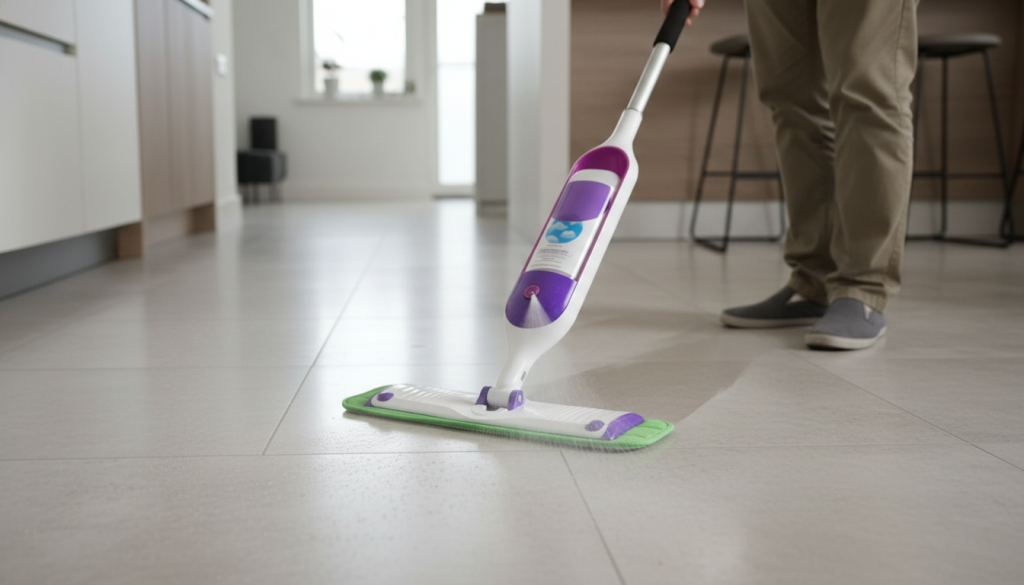
Why it’s great for tile + vinyl
Spray mops shine on vinyl because you can keep moisture low and controlled. On tile, they’re perfect for routine cleaning—especially when you’re not trying to scrub grout like it owes you money.
What I like (real use)
- You can clean a kitchen in minutes without dragging out a bucket
- Pads swap quickly, which is key to avoiding streaks
Pros
- Best streak control for vinyl
- Fast, simple, low mess
- Washable pads save money and reduce waste
Cons
- For deep grout cleaning, you’ll need extra elbow grease or a targeted brush
Best for: busy weeknights, vinyl floors, and “clean enough to feel nice” maintenance.
2) 18″ Pro Microfiber Flat Mop (Wide Head)
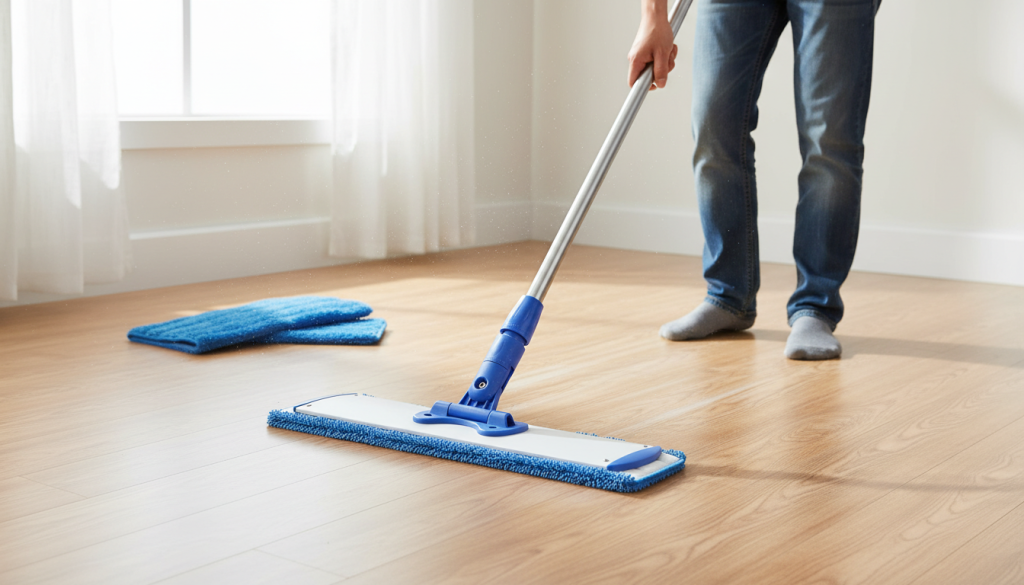
Why it’s great for larger spaces
A wide microfiber head covers more area per pass, which makes it ideal for open rooms. Microfiber also tends to leave a cleaner finish because it picks up fine particles that cause haze.
What I like (real use)
- Fewer passes = fewer streak opportunities
- Great for quick “whole room” cleaning
Pros
- Fast coverage, especially in big rooms
- Consistently even finish when used damp
- Excellent for vinyl when you avoid overwetting
Cons
- If you don’t swap pads, it can start smearing once it loads up
- Edges/corners may need a quick follow-up
Best for: open layouts, larger kitchens, and anyone who wants efficient streak-free mopping.
3) Reusable Microfiber Mop Pads (Compatible with Swiffer PowerMop and Bona)
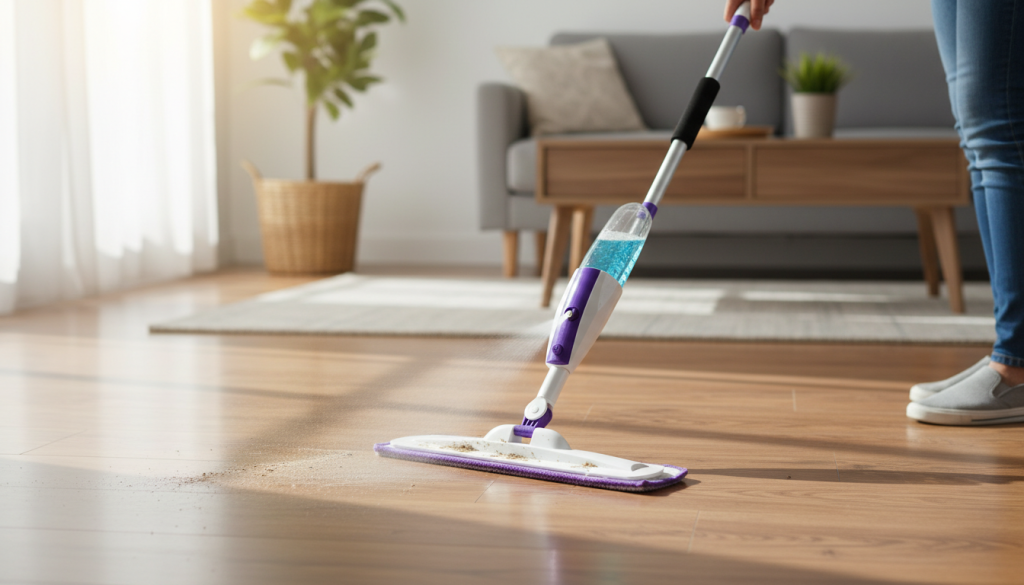
Why it’s great if you already own the system
If you’re already using a Swiffer-style or Bona-style setup, reusable pads can upgrade results because microfiber can hold more debris and handle repeated passes without falling apart.
What I like (real use)
- You can keep several clean pads ready and swap mid-clean
- Helps a lot in homes with pets (hair overload is real)
Pros
- Easy upgrade if you already have the handle/system
- Washable pads = more consistent performance
- Great for light daily cleaning and quick touch-ups
Cons
- Results depend on your spray solution and pad cleanliness
- Don’t use fabric softener when washing (it ruins absorbency)
Best for: people who want better results without changing their whole routine.
4) 41″ Commercial-Style Dust Mop (Dry Mop)
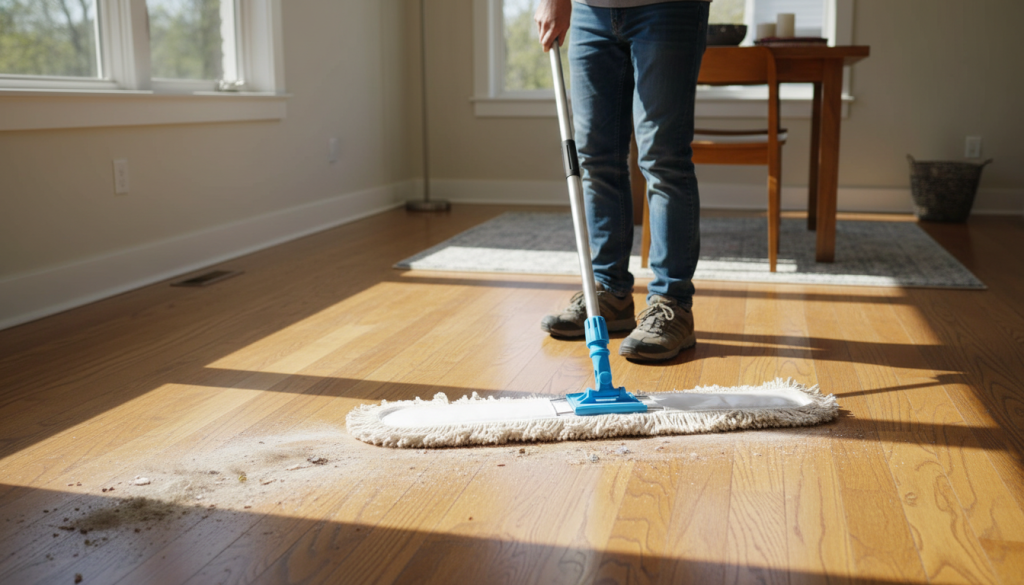
Why it’s the secret weapon for streak-free floors
Streaks often come from wet-mopping over dust and grit. A big dust mop lets you grab everything dry first—then your wet mop is doing actual cleaning, not moving sand around.
What I like (real use)
- It makes the “real mop” faster and cleaner
- Great for daily pet hair patrol
Pros
- Excellent for hair, dust, crumbs on large areas
- Reduces wet-mop streaks by removing grit first
- Very fast for maintenance cleaning
Cons
- Not for sticky spills (it’s a dry tool)
- Needs regular cleaning to stay effective
Best for: pet owners and anyone who wants floors to look clean without constant wet mopping.
The best overall choice (what I’d pick first)
For most small-to-medium homes with tile and vinyl, the refillable spray mop is the most practical “use it every day” winner because it controls moisture (less streaking), sets up fast, and still cleans well.
If you have a bigger space or hate doing multiple passes, the 18″ flat microfiber mop is the fastest way to get an even, streak-free finish.
My streak-free routine (works on both tile + vinyl)
- Dry pass first: vacuum or dust mop.
- Mix simple solution: warm water + a small amount of pH-neutral floor cleaner (go light).
- Work in sections: 3×3 feet, don’t flood the floor.
- Swap pads often: when it looks gray, it’s done.
- Quick dry buff: one light pass with a cleaner/drier pad.
FAQ
Can I use a spin mop on vinyl?
Yes, but the key is very low water. Vinyl doesn’t like being soaked. Wring aggressively and avoid leaving puddles.
Is vinegar okay for tile and vinyl?
Sometimes, but it depends on your flooring and finish. Acidic cleaners can be risky on certain surfaces and grout over time. If you want the safest bet, stick to a pH-neutral cleaner.
How often should I wash microfiber pads?
After each cleaning session. If you mop frequently, keep multiple pads so you can swap mid-clean without smearing.